
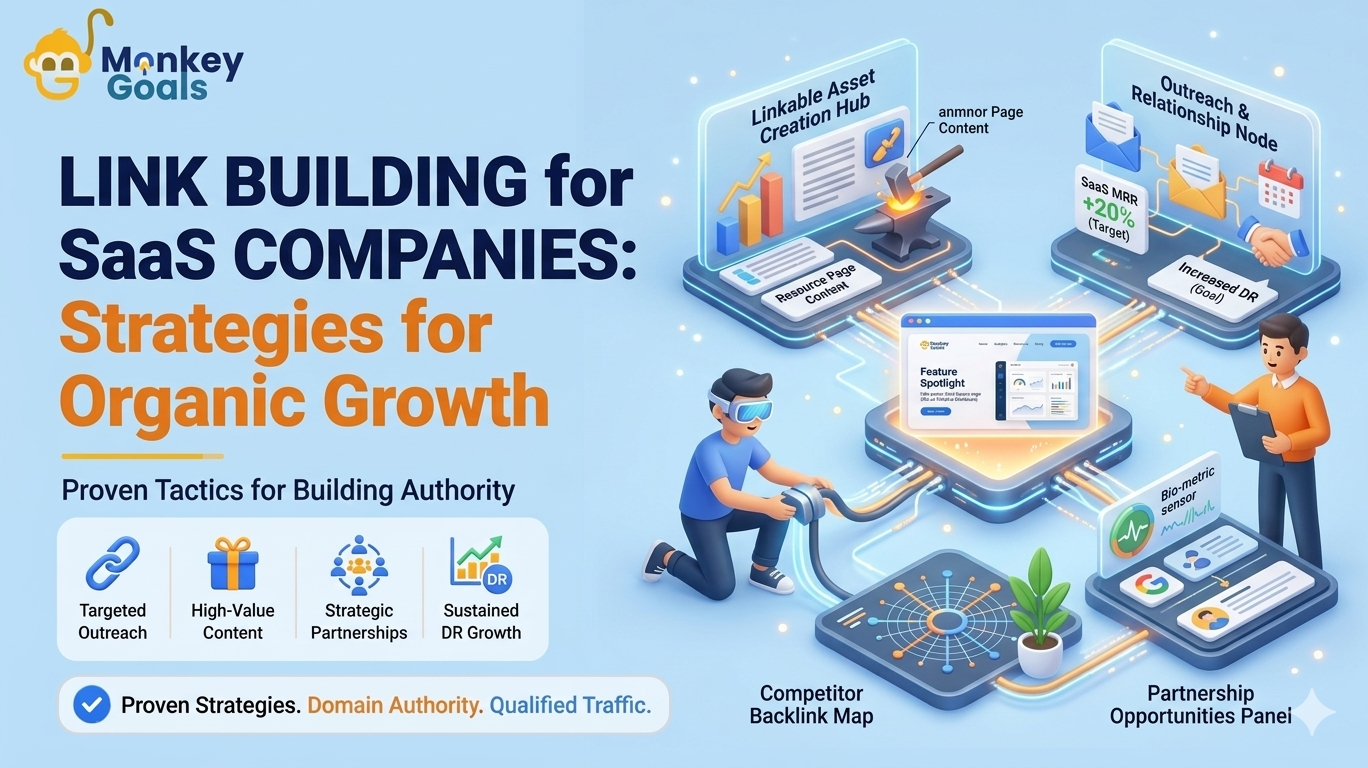
Let’s be honest — ranking a SaaS product is hard.
You’re not selling a local service where a few citations and a Google Business Profile can get you on the map. You’re competing against well-funded companies with massive content teams, years of domain authority, and backlink profiles that look like they’ve been at it since Google was born.
So where does a SaaS company start?
Link building. But not just any link building — a strategy built specifically for how the SaaS world works. In this post, we’ll break down exactly what link building for SaaS companies looks like, why it’s different from other industries, and the strategies that actually move the needle.
Why Link Building Matters More for SaaS Than Almost Any Other Industry
SaaS buyers don’t make quick decisions. They Google their problem, read five blog posts, compare three tools, check reviews on G2 or Capterra, ask their team — and then they convert.
That entire journey is happening in search. And if your website isn’t showing up during that research phase, you’re invisible to potential customers before they ever discover your product.
Here’s the data that makes this hard to ignore: according to SalesHive, organic search still drives around 53% of total SaaS website visits in 2025. That’s more than half your potential traffic coming from a channel you can build and own over time — without paying for every click.
Backlinks are the fuel that makes that organic engine run. Google treats them as votes of credibility, and pages with stronger backlink profiles consistently rank higher for the keywords your buyers are searching.
How SaaS Link Building Is Different from Other Industries
Before we get into tactics, it’s worth understanding why SaaS requires a different approach.
1) Your buyers are sophisticated researchers
B2B SaaS buyers read everything. They consume comparison posts, case studies, integration guides, and expert roundups before making a purchase decision. This means your backlinks need to come from places your buyers actually visit — relevant tech publications, industry-specific blogs, and niche SaaS communities — not generic directories or unrelated websites.
2) Your niche limits your linking pool
A local plumber can get links from neighbourhood directories, local news sites, and city-specific listicles. A SaaS company targeting HR professionals or fintech teams has a much smaller pool of truly relevant sites. This makes quality far more important than quantity. One link from a well-regarded SaaS or B2B tech blog is worth more than twenty links from irrelevant domains.
3) Your content has to work harder to earn links
SaaS topics can be dense and technical. Generic “What is link building?” articles won’t attract many backlinks. What does earn links is original data, strong case studies, integration guides, and content that genuinely helps people solve real problems — the kind of content that other site owners actually want to reference.
6 Link Building Strategies That Actually Work for SaaS Companies
1. Guest Posting on Relevant Tech and SaaS Blogs
Guest posting is still one of the most reliable and controlled link-building methods for SaaS companies. The key word here is relevant. You want your guest posts on sites where your ideal customers actually spend time — not just anywhere that accepts contributions.
Start by identifying 20–30 blogs in your space: SaaS news sites, marketing blogs, product-led growth communities, or industry-specific publications that serve your target buyer. Look for sites with real editorial standards, actual traffic, and a domain rating (DR) above 30 as a baseline.
When you pitch, lead with a unique angle. Don’t offer something they’ve published ten times already. Instead, bring a fresh perspective, an original example, or a framework your team actually uses.
One internal link tip: Every guest post should link to a specific, relevant page on your site — ideally a service page or a high-value blog post — with a natural anchor text that fits the context.
2. Niche Edits (Link Insertions) in Existing Content
Niche edits — also called link insertions — involve getting your link added to an article that already exists, is already indexed, and is already getting traffic. Because the page has history and existing authority, these links can often have a faster impact than links from brand new content.
The approach works best when you identify articles that are ranking for a keyword relevant to your SaaS category, reach out to the site owner, and offer to contribute a genuinely useful addition — a new stat, an updated section, or a relevant resource — in exchange for a link.
Quality matters here, too. Target pages that are actively ranking and receiving organic traffic, not dormant posts from 2019.
3. Partner and Integration Pages
This one is underused by almost every SaaS company — and it’s one of the easiest wins available to you.
If your product integrates with other tools (Slack, HubSpot, Zapier, Notion, or anything else), reach out to those partners. Many of them have partner directories, integration marketplaces, or resource pages where they list compatible tools — and each listing often comes with a backlink.
These links tend to be highly relevant, come from reputable domains, and don’t require you to create any new content. They’re also sustainable — as long as the integration exists, the link exists.
4. Original Data and Research
SaaS companies sit on a goldmine that most never tap into: their own data.
Your platform collects usage patterns, benchmarks, engagement trends — information that no one else has. Turn that into an original research post or a data-driven industry report, and you have something that journalists, bloggers, and other SaaS companies will link to because you’re the only source.
Think: “We analysed 500 SaaS onboarding flows — here’s what separates the ones that convert.” That kind of content earns links passively over time and also builds genuine thought leadership for your brand.
5. Competitor Backlink Gap Analysis
One of the fastest ways to find link opportunities is to look at where your competitors are already getting their links — and then target the same sources.
Use a tool like Ahrefs or SEMrush, plug in two or three competing SaaS companies, and run a backlink gap report. You’ll see which sites are linking to them but not to you. Many of those sites are already open to linking to similar tools, which makes your outreach warmer and your pitch much easier.
This isn’t copying your competitors — it’s understanding the landscape and making sure you’re visible in the same places.
6. Digital PR and Expert Contributions
Journalists and content creators constantly look for expert sources. Tools like HARO (Help a Reporter Out), Connectively, and SourceBottle allow you to respond to specific media queries and get featured — with a backlink — in articles on major publications.
This approach takes consistency. You won’t get placed every time. But when it works, you earn editorial links from high-authority domains that are very hard to get through outreach alone.
Even without formal PR tools, you can contribute expert quotes to industry roundups, participate in podcasts (which often link to guests in show notes), or write thought leadership pieces for SaaS communities where editorial standards are high.
What Makes a Backlink Actually Good for a SaaS Site?
Not all links are equal, and in the SaaS space, chasing volume is a fast path to wasted budget. Here’s what you should actually look for when evaluating whether a link opportunity is worth pursuing:
- Topical relevance — Does the site cover topics your target audience cares about? A link from a random cooking blog won’t help your B2B SaaS rank for anything meaningful.
- Real organic traffic — A high domain rating (DR) means nothing if the site gets zero visitors. Check that the linking page gets actual traffic using Ahrefs or SEMrush.
- Editorial control — Was the link earned through genuine content, or is it a paid placement on a PBN (private blog network) with no editorial oversight? Google can spot the difference.
- Anchor text diversity — If every single link to your site uses the exact same keyword as anchor text, that’s a red flag. Natural backlink profiles include a mix of branded, partial-match, and generic anchor text.
Common Mistakes SaaS Companies Make with Link Building

- Going for volume over relevance. Fifty links from unrelated sites will do less for you than five links from relevant, high-authority sources in your niche.
- Expecting overnight results. Link building is a compounding strategy. Most companies see meaningful ranking movement within 3–6 months of consistent effort — not weeks.
- Ignoring link decay. Links get removed. Pages get deleted. Sites go down. Your backlink profile needs ongoing attention, not a one-time sprint.
- Over-optimising anchor text. Using your exact-match target keyword as the anchor text every time is a Google spam signal. Keep it natural and varied.
Should You Handle Link Building In-House or Hire an Agency?
Both can work — it depends on your resources and where you are in your growth.
If you have a content team, strong industry relationships, and bandwidth for consistent outreach, in-house link building is absolutely viable. The challenge is that it’s time-intensive. Researching prospects, writing pitches, following up, managing placements — this is a full-time effort.
Many SaaS companies find that outsourcing to a specialist link-building agency gives them faster results without the overhead. A good agency already has publisher relationships, a vetting process for link quality, and the outreach infrastructure to run campaigns at scale.
The right choice isn’t about budget alone — it’s about whether link building is getting the time and consistency it needs to actually work.
Final Thoughts
Link building for SaaS companies isn’t a quick win — and it’s not supposed to be. It’s a long-term investment in organic visibility that compounds over time, reduces your dependence on paid channels, and puts your product in front of buyers who are actively searching for what you offer.
The companies that win in organic search aren’t necessarily the ones with the best products. They’re the ones who consistently build authority, earn relevant backlinks, and show up at every stage of the buyer’s research journey.
If you’re ready to build a backlink strategy that actually fits your SaaS business, we’d love to help.