
You can have the most beautiful website on the internet. You can fill it with useful content, eye-catching design, and the best products or services. But here’s the truth: none of that matters if people can’t find you.
That’s where link building for business growth comes in. Links act like digital roads that connect your business to the wider online world. They don’t just bring people to your site—they tell search engines like Google, “This business is trusted, useful, and worth showing to others.”
Without links, your website is like a shop in the middle of a desert. With them, it’s like opening on a busy city street where thousands of potential customers walk by every day. Understanding the importance of link building is crucial for any business competing online today.
What Exactly Is Link Building?
In simple terms, link building means earning links from other websites back to your own. Each of these links acts like a recommendation.
Search engines use these recommendations to judge whether your content is trustworthy and relevant. The more high-quality backlinks for SEO you have, the more likely your website is to rank well in search results.
But not all links are created equal. A single link from a respected website in your industry is far more powerful than dozens from random or low-quality sites. Think of it like real-world endorsements: would you rather have one major industry publication recommend you, or a hundred people no one has heard of?
Why Your Business Needs Link Building for Growth
Link building drives visibility, traffic, and trust—here are the five key benefits:
Better Search Rankings
Google uses hundreds of ranking signals to decide which pages to show on top, but backlinks for SEO remain one of the strongest signals. According to a Backlinko study, the #1 result in Google has 3.8× more backlinks than pages ranked 2–10.
This means that if you want your business to appear above your competitors, you can’t ignore the importance of link building. Without quality backlinks, even the best content might stay buried on page five, where no one will ever see it.
Free Referral Traffic
Every link from another website is a doorway. When people click it, they land on your site—and these are often highly relevant visitors already interested in your topic.
Unlike ads, which stop the moment you pause spending, referral traffic keeps flowing as long as the link exists. A single well-placed link on a popular site can bring thousands of visitors over time, month after month, without any ongoing cost. This is one of the key ways business growth through SEO becomes sustainable and predictable.
Build Authority and Trust
People trust what others recommend. The same principle works online. If respected websites link to your content, people automatically view your business as more credible.
According to Sixth City Marketing, 85% of marketers say link building improves brand authority. This matters beyond rankings alone—it affects how customers perceive your business from the first click.
Long-Term Value
Advertising is short-lived. Stop the campaign, and the traffic vanishes. But a strong backlink keeps working in the background. It continues to deliver visitors, boost rankings, and build trust for months or even years.
This long-term value is why nearly half of businesses spend $5,000–$10,000 per month on link building, according to DemandSage. They see it as an investment in business growth through SEO rather than a one-time expense.
Local Visibility
For local businesses, link building for business growth can be the difference between being found and being ignored. Appearing in local blogs, newspapers, and directories signals to Google that you’re relevant to people in your area.
According to Reliqus Consulting, 92% of searchers choose a business from the first page of local results. Local links can make or break your visibility in your community.
The Link Building Reality Check
To really understand the challenge and the opportunity, consider these numbers:
- According to DemandSage, 94% of online content gets zero external links
- According to Spiralytics, 41% of large companies say link building is the hardest SEO task
- According to HubSpot, 51% of marketers report that it takes 1–3 months to see results
- According to Increv, Long-form content (3,000+ words) earns 77.2% more backlinks
These stats reveal two things clearly: building links is hard, and most businesses fail at it. But with the right link building strategy, you can stand out from the 94% who never earn a single link.
How Link Building Transforms Business Performance
Here’s what happens when you build quality links consistently:
SEO & Visibility: Better links lead to higher rankings, which means more people find you organically. You’re no longer dependent on paid ads to get discovered.
Referral Traffic: Links bring visitors without advertising costs. These visitors often convert better because they’ve been pre-qualified by the site that linked to you.
Credibility: More links from trusted sites strengthen your brand image. When potential customers research you, they see your name appearing on respected industry sites.
Sales & Conversions: Relevant visitors increase buying opportunities. Traffic from authoritative sources tends to have higher intent and better conversion rates.
Cost Savings: Links don’t disappear when marketing budgets get cut. They’re assets that keep delivering value year after year.
Smart Link Building Strategies That Work
These proven strategies help you earn high-quality links that improve rankings and authority—here are the five strategies that work:
If you want links, give people something worth linking to. This could be original research, detailed guides, expert interviews, or useful free tools.
HubSpot’s free marketing tools, for example, earn thousands of backlinks for SEO every year because people genuinely find them valuable. When journalists, bloggers, and marketers write about marketing automation, they naturally link to HubSpot’s resources.
Other examples that attract links naturally include industry surveys with original data, comprehensive beginner’s guides, interactive calculators, and annual reports on industry trends.
Guest Posting
Guest posting means writing helpful articles for other websites in exchange for a link back to your site and exposure to a new audience.
The key is choosing the right publications. One article on a well-respected industry blog is worth more than ten on obscure sites no one reads. Focus on quality over quantity, and make sure your contribution genuinely helps their readers.
Local & Community Partnerships
If you’re a local business, sponsor a charity event, collaborate with schools, or partner with local blogs. These partnerships often result in natural backlinks while simultaneously building your reputation in the community.
A coffee shop that sponsors a local 5K run, for instance, typically gets linked from the event website, local news coverage, and participant blogs—all while supporting a good cause.
Many high-quality links are earned through personal outreach. Find content that mentions your topic but doesn’t link to any resources. Then send a polite, personalized email explaining why your content would add value for their readers.
The key is making it genuinely about their audience, not just asking for a favor. Strong relationships with editors, journalists, and fellow business owners become the foundation of any sustainable link-building strategy.
Monitor & Disavow Bad Links
Not all backlinks are good. Some come from spammy or irrelevant sites that can actually hurt your rankings. Use tools like Google Search Console or Ahrefs to monitor your backlink profile regularly.
If you spot links from obviously low-quality sources—gambling sites, link farms, or hacked websites—use Google’s Disavow Tool to tell search engines to ignore them. Protecting your backlinks for SEO is just as important as earning new ones.
Common Mistakes to Avoid
Even though link building is powerful, many businesses sabotage themselves with these mistakes:
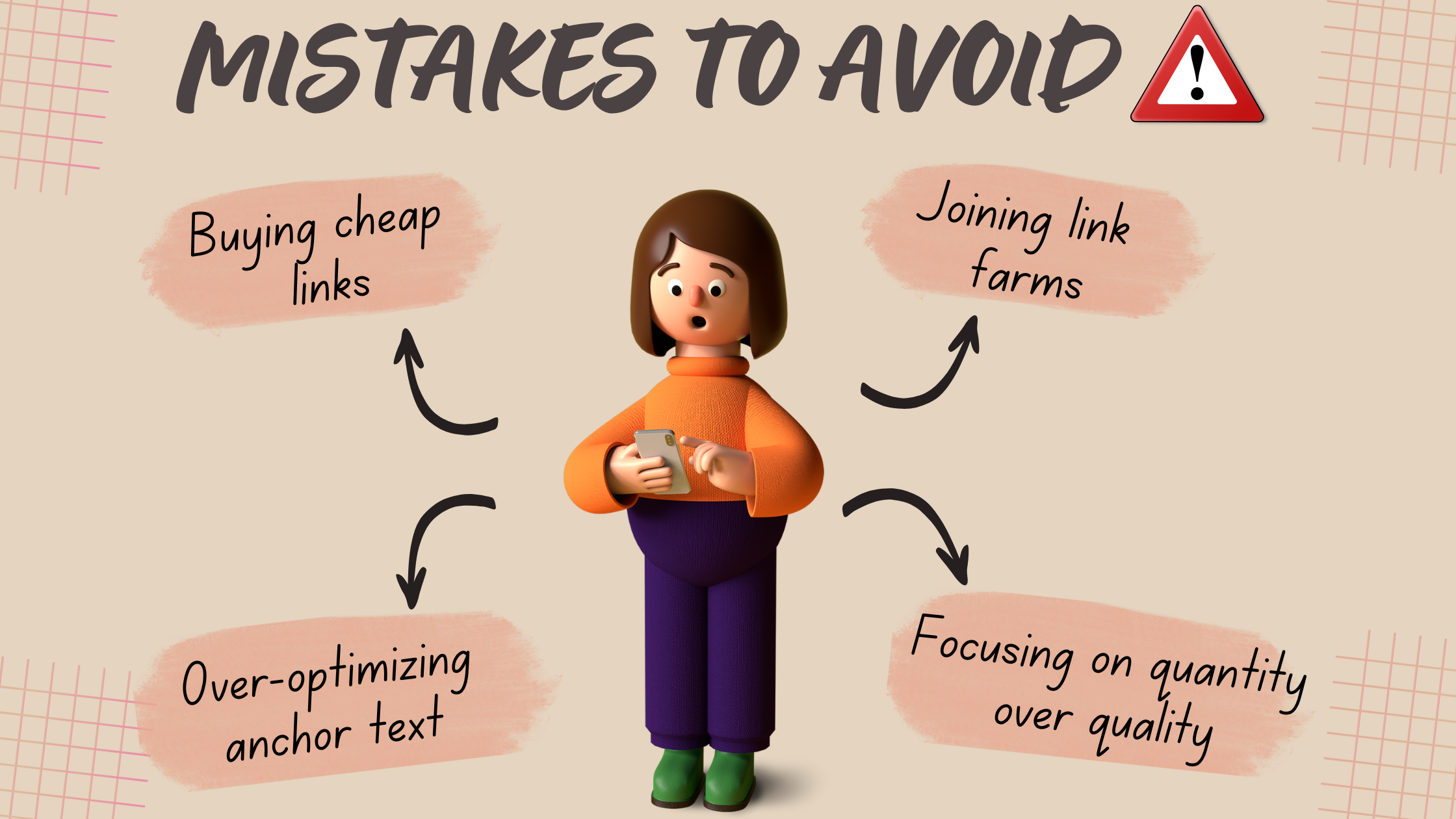
Buying cheap links: These almost always come from low-quality sites and can trigger Google penalties.
Joining link farms: Networks that exist only to exchange links are easily detected and penalized.
Over-optimizing anchor text: If every link to your site uses the exact same keyword phrase, it looks manipulative.
Focusing on quantity over quality: A hundred links from irrelevant blogs won’t help as much as five links from respected industry publications.
Avoiding these mistakes protects your rankings and ensures your link building strategy produces lasting results.
When to Expect Results
Patience is essential. According to HubSpot, 51% of marketers see results within 1–3 months. Others report 3–6 months, depending on competition and niche.
The good news? Once results begin, they compound. Your first ten links might take months to earn. But as your authority grows, the next ten come faster. Sites start linking to you without outreach. Your content gets discovered and shared naturally.
This compounding effect is why successful businesses treat link building for business growth as an ongoing priority rather than a one-time project. The businesses that commit to consistent effort over time see the most dramatic results.
Conclusion
Link building isn’t optional anymore. It’s the difference between being found and being forgotten. While 94% of content earns zero links, the businesses that master this skill dominate their markets.
The importance of link building only continues to grow as competition increases. Start small. Create one piece of truly valuable content. Reach out to five relevant websites. Build one meaningful partnership. Then repeat.
The backlinks for SEO you earn today will keep working for you tomorrow, next month, and next year. That’s what makes link building not just important, but non-negotiable for any business serious about sustainable growth.